EVELYN CARTER — THE OFFICER THEY NEVER SEE COMING
Most people notice the uniform first.
The rank.
The ribbons.
The polished shoes.
The salute.
Colonel Evelyn Carter learned long ago that those things could tell you what position a person held.
They could not tell you who that person really was.
That lesson followed her through more than twenty years in the United States military.
By the time Evelyn reached senior command, she had served on remote installations, led units through difficult deployments, trained young officers, investigated leadership failures, and watched good soldiers become extraordinary leaders.
She had also watched the opposite happen.
She had seen intelligent officers become arrogant the moment they received authority.
She had watched commanders confuse fear with respect.
She had seen careers damaged because someone asked an inconvenient question.
She had watched junior soldiers remain silent while powerful people crossed lines everyone could see.
Those experiences shaped Evelyn more than any medal ever could.
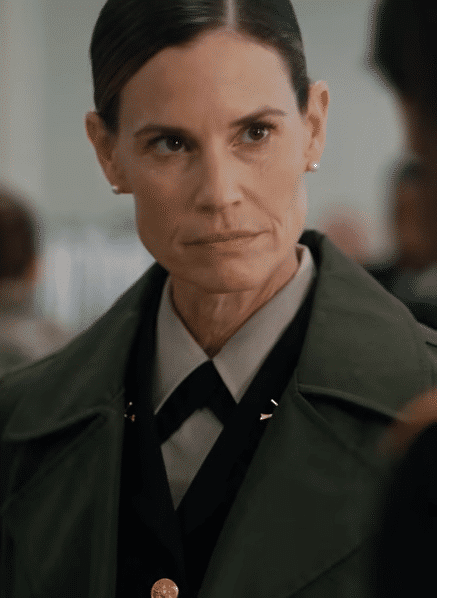
At first glance, there was nothing dramatic about her.
Evelyn Carter was a woman in her forties with straight dark-brown hair usually tied or styled neatly for duty, an observant face, and a calm voice that rarely needed to become loud.
She did not enter rooms demanding attention.
She usually received it anyway.
Her greatest strength was not physical power.
It was control.
Evelyn listened before she spoke.
She noticed who interrupted whom.
She noticed which soldiers stopped talking when a commander entered the room.
She noticed when laughter sounded genuine and when it sounded forced.
She noticed the nervous glance a young lieutenant gave his superior before answering a simple question.
Most importantly, she understood something many leaders forgot.
People behaved differently when they knew someone important was watching.
So whenever possible, Evelyn preferred to see them when they believed nobody important was there.
That became the foundation of her reputation.
And eventually, the foundation of the series.
Evelyn could arrive at a military installation in a formal decorated uniform and be treated like the colonel she was.
But that told her almost nothing.
The real information came when she arrived quietly.
Sometimes wearing a simple blouse.
Sometimes carrying a visitor badge.
Sometimes eating alone in a cafeteria.
Sometimes standing beside young soldiers in a training facility without announcing who she was.
Those were the moments when people revealed themselves.
One of the earliest stories began in a crowded base dining hall.
Evelyn had chosen a quiet table near the center of the room.
She had barely started eating when a major stopped beside her.
He glanced at the visitor badge near her waist.
Then he looked at the surrounding officers.
“Ma’am, you need to get up.”
Evelyn looked at him.
“Why?”
“This section is for officers.”
He expected embarrassment.
Instead, Evelyn remained seated.
He pointed toward her badge.
“A visitor badge doesn’t make you an officer.”
Evelyn lifted it slowly between two fingers.
“Did I say it did?”
People nearby began listening.
The major became irritated.
He pointed toward the far side of the dining facility.
“There’s a table near the kitchen.”
Evelyn studied him.
“You want me to move there?”
“It would be better for everyone.”
A lieutenant at the next table finally stood.
“Major, maybe she can stay there.”
The major immediately turned.
“Sit down, Lieutenant.”
And the lieutenant did.
That moment mattered to Evelyn more than the insult directed at her.
The major did not know who she was.
But the lieutenant did know what was happening.
He knew it was wrong.
He tried to speak.
Then rank silenced him.
That was the problem Evelyn had spent years trying to understand.
The question was never simply whether one arrogant officer behaved badly.
The real question was why everyone around him believed they had to accept it.
Before the confrontation could go further, the dining-hall doors opened.
Senior officers entered.
Their eyes found Evelyn immediately.
The major’s expression changed.
Evelyn’s did not.
That became a pattern throughout her career.
Someone would underestimate her.
Someone would confuse her silence with weakness.
Someone would use rank as a weapon.
Then the balance of power would suddenly shift.
But Evelyn never considered those moments victories.
Humiliating an arrogant officer was easy.
Changing the culture that created him was much harder.
And that is what the Evelyn Carter series is really about.
Every episode begins with a situation that appears simple.
A woman sitting in the wrong section.
A coffee order delivered with unnecessary contempt.
A soldier being mocked during training.
A junior officer pressured into ignoring a safety concern.
A veteran treated like an inconvenience.
A young recruit blamed for the mistake of someone more powerful.
A commander using a promotion recommendation to control a subordinate.
Then Evelyn looks closer.
Behind every small act of disrespect is usually something larger.
A pattern.
A system.
A fear nobody wants to describe.
Evelyn is not interested only in catching people behaving badly.
She wants to know how long they have been doing it.
She wants to know who knew.
She wants to know who stayed silent.
And she wants to know who tried to speak before she arrived.
That makes her dangerous to the wrong kind of officer.
Some people begin fearing Evelyn before they ever meet her.
Stories travel between bases.
“They say Carter doesn’t announce inspections.”
“They say she remembers every name.”
“They say she can tell when you’re lying.”
“They say she once removed a major’s authority before lunch.”
“They say a general changed an entire command policy after one conversation with her.”
Most of those stories become exaggerated.
Evelyn never corrects them.
Fear of Evelyn, however, is not what she wants.
She wants standards.
There is a difference.
She can be demanding.
She expects soldiers to be prepared.
She expects officers to know their responsibilities.
She has little patience for laziness disguised as confusion.
But she also believes authority creates responsibility, not privilege.
That principle appears again and again throughout the series.
When Evelyn sees a senior officer mocking someone lower in rank, she steps in.
When someone makes a genuine mistake and accepts responsibility, she often gives them another chance.
When someone lies to protect their position, her patience disappears quickly.
Her punishments are rarely impulsive.
That makes them more frightening.
Evelyn listens.
She asks questions.
She waits.
Then she acts.
Sometimes her intervention is administrative.
Sometimes it is personal.
And sometimes the environment becomes physical.
Evelyn did not spend decades in military service without learning how to handle herself.
She knows combatives.
She understands leverage, balance, distance and timing.
She can recognize the difference between someone posturing and someone preparing to attack.
But she never fights to prove she is tough.
That distinction becomes important whenever someone decides to challenge her physically.
In one story, Evelyn enters a combatives room where a larger male soldier is humiliating younger trainees.
He sees a middle-aged female officer watching from the edge of the mat and assumes she has no idea what real fighting looks like.
He jokes.
She ignores him.
He challenges her.
She declines.
He pushes again.
Eventually, she steps onto the mat.
What follows is not a wild brawl.
It is a demonstration.
Every movement is controlled.
One missed strike.
One pivot.
One balance break.
One clean takedown.
The room goes silent.
Evelyn offers him a hand.
“Strength without control is just another weakness.”
Then she walks away.
The message is always larger than the fight.
In another episode, a confrontation in a mess hall turns ugly when an officer believes his rank gives him permission to physically intimidate someone.
The room freezes.
Evelyn does not.
She understands that moments like that define institutions.
If everyone watches and nobody responds, the behavior becomes normal.
So she responds.
Not recklessly.
Decisively.
That is one reason younger soldiers begin trusting her.
They learn that Evelyn will not demand courage from people while remaining safe herself.
If someone must speak first, she will.
But Evelyn’s world is not divided neatly between heroes and villains.
Some of her most interesting cases involve decent people who make bad decisions.
An ambitious lieutenant who remains silent because she desperately needs a recommendation.
A captain who follows an unsafe order because challenging his commander could end his career.
A sergeant who joins in mocking someone simply because everyone else is laughing.
Evelyn understands them.
But understanding is not the same as excusing.
One of her most repeated lessons is simple:
“The moment you know something is wrong is the moment your decision begins.”
That line becomes part of her reputation.
So does another:
“Rank tells me what you’re responsible for. It doesn’t tell me what you’re worth.”
Over time, the series reveals more about Evelyn herself.
She did not always have this confidence.
Years earlier, she was the junior officer who hesitated.
She once watched a respected commander make a dangerous decision and waited too long to challenge him.
Someone was hurt.
Evelyn never forgot it.
That event shaped the leader she later became.
It explains why silence bothers her so deeply.
It explains why she pays attention to the quietest person in the room.
It explains why she sometimes seems harder on officers who say, “I knew it was wrong, but…”
Because Evelyn knows exactly what comes after “but.”
Fear.
Career.
Reputation.
Convenience.
She has used those excuses herself.
Once.
Never again.
As the series grows, Evelyn begins discovering that some leadership failures are connected.
Reports disappear.
Complaints are quietly reassigned.
Promotion recommendations change after soldiers challenge powerful officers.
Certain commanders protect one another.
What initially seemed like isolated arrogance begins forming a pattern across several installations.
Evelyn starts asking questions.
The wrong people notice.
Suddenly, she is no longer simply investigating others.
She becomes the target.
Meetings are canceled.
Documents disappear.
Someone leaks information intended to damage her reputation.
A senior official privately advises her to stop digging.
“You’ve already made your point, Carter.”
Evelyn looks at him.
“No. I’ve only found the first person who doesn’t want me asking.”
From that moment, the stakes change.
The series becomes not only about Evelyn confronting individual bullies.
It becomes about what happens when one officer challenges a network of people who have spent years protecting themselves.
Some will attack her career.
Others will challenge her authority.
A few may try to provoke her into making a mistake.
Evelyn understands exactly what they want.
So she becomes even calmer.
Each episode reveals another side of her.
The colonel.
The mentor.
The investigator.
The fighter.
The woman behind the uniform.
Sometimes Evelyn wins publicly.
Sometimes nobody ever learns what she prevented.
Sometimes the officer she confronts changes.
Sometimes he doesn’t.
But every story asks the same fundamental question:
What does someone do with power when they believe nobody can challenge them?
Evelyn Carter has spent her career finding out.
People continue making the same mistake when they meet her.
They see a quiet woman.
A visitor.
Someone eating alone.
Someone who does not immediately announce her rank.
Someone they believe can be dismissed.
Then Evelyn looks at them.
Listens.
Waits.
And allows them to show exactly who they are.
By the time they ask who she really is, it is usually too late.
Because Colonel Evelyn Carter never needs to tell people she has authority.
She waits to see what they do when they believe she doesn’t.